Skip to content
Most homeowners don’t realize new asphalt needs 6–12 months to cure before its first seal. After that, we generally reseal every 2–3 years, but heat, UV exposure, traffic, and drainage can shift that window. In hotter regions, we lean closer to 2 years; shaded, low-traffic areas can stretch to 3 if the surface stays intact. The right schedule cuts oxidation, blocks water, and avoids costly failures, yet a few telltale signs can force earlier action.
Factors That Influence Resealing Frequency
Although no two pavements age the same, several variables dictate how often we should reseal asphalt: climate exposure (UV, heat, freeze-thaw), traffic load and type (cars vs. heavy trucks), surface age and condition (oxidation, cracking), quality of the original mix and compaction, drainage and subbase performance, prior sealcoat quality and number of coats, and chemical exposure (de-icers, oil, fuel).
We assess UV index, temperature swings, and rainfall to estimate oxidation and moisture ingress. We evaluate rutting risk, turning stresses, and parking patterns. We review fines content, air voids, density, and lift thickness. We verify slope, infiltration, joint integrity, and contaminant history.
Typical Resealing Timelines for Residential Driveways
When we set expectations for residential driveways, a practical resealing cadence is every 2–3 years, adjusted by climate, traffic, and material performance. In hot regions like Central Texas, UV and heat accelerate oxidation; we often reseal closer to 2 years. Low-traffic, shaded driveways may stretch to 3 years if the surface remains dark, tight, and water beads on contact. New asphalt should cure for 6–12 months before its first seal. We also track indicators: graying, hairline cracks, dull texture, and slow water runoff. If oil spots, raveling, or porous texture appear, we reseal sooner to prevent moisture intrusion.
Resealing Schedules for Commercial Lots and Roads
For commercial lots and roads, we target a reseal cycle of 1–2 years for high-traffic areas and 2–4 years for moderate use, tightening intervals in hot, UV-intense climates like Central Texas. We base schedules on load intensity, turning movements, and surface oxidation. Heavy truck routes, loading zones, entrances, and stop bars wear fastest; prioritize them annually. For big lots, phase work to maintain operations and manage budgets. We verify surface prep: crack sealing, patching, and oil-spot priming before sealcoat. Specify commercial-grade sealer at proper film thickness, with sand and polymer additives for traction and durability. Track condition annually and adjust.
Climate and Weather Impacts on Sealcoat Longevity
Our reseal intervals only work if we account for weather stressors, especially in Texas’s heat. High pavement temperatures accelerate binder oxidation, softening in summer and embrittlement over time. UV exposure degrades sealcoat polymers, while sudden thunderstorms drive hydraulic erosion before full cure. Freeze–thaw cycles, even limited ones, pump water into microcracks, magnifying raveling.
- Hot, dry climates: shorten intervals; use higher-solid, UV-resistant formulations and darker aggregates for heat dispersion.
- Wet seasons: schedule reseals with ?24–36 hours of dry forecast; specify faster-cure additives and proper slope for runoff.
- Wind and dust: control surface cleanliness; increase application rate to maintain film thickness.
Signs Your Asphalt Is Due for Resealing
Tell-tales on the surface signal it’s time to reseal: a faded, chalky gray color from UV oxidation; hairline cracks widening or linking into “alligator” patterns; sand-like raveling where fine aggregates loosen; a rough, porous texture that soaks water instead of beading; oil and chemical stains that won’t clean off; and dull, uneven sheen where traffic has worn through the last sealcoat. We also watch for ponding water, edge unraveling, and a loss of tight, black appearance within high-exposure zones. If sand kicks up during sweeping, or water penetrates quickly after rain, the binder’s compromised. Reseal before cracks admit moisture.
How Traffic Volume and Vehicle Type Affect Wear
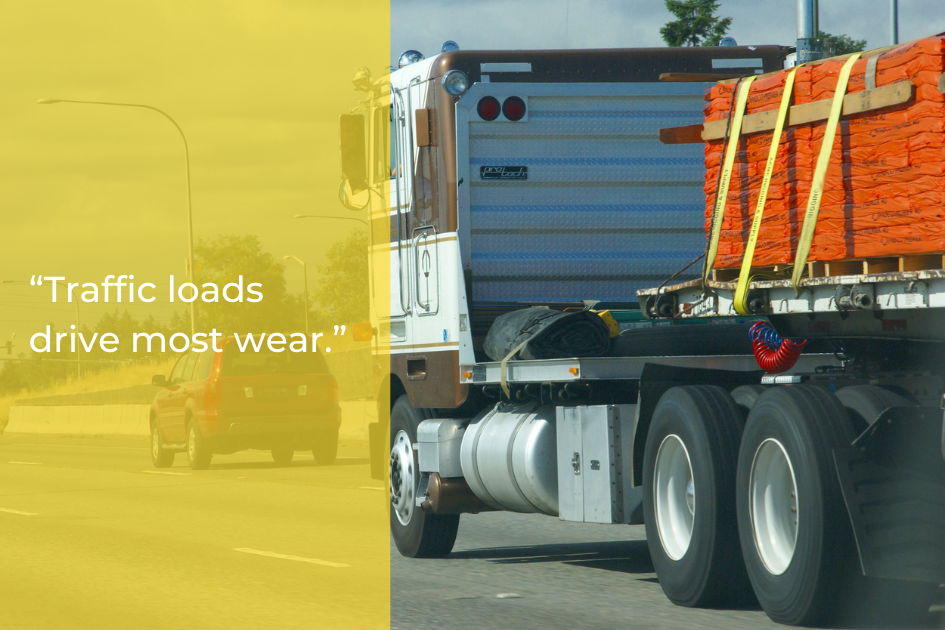
Although weather ages asphalt, traffic loads drive most wear: more axle passes and heavier vehicles accelerate oxidation, raveling, and fatigue cracking. We evaluate Equivalent Single Axle Loads (ESALs) to translate daily traffic into structural demand. Light-duty cars contribute little; buses, trash trucks, deliveries, and semis impose exponential damage due to axle weight and tire pressure. Turning, braking, and channelized lanes concentrate shear, so intersections and loading zones fail first.
- High volume: shorten reseal intervals to 12–18 months.
- Heavy vehicles: prioritize thicker sealcoats and tighter schedules (12 months).
- Maneuvering zones: reseal and stripe more often; consider localized reinforcement.
The Role of Sealcoat Quality and Application Method
Heavy loads and tight turns set the pace for wear, but the sealcoat you choose, and how it’s put down, ultimately governs how long that surface resists oxidation, moisture, and raveling. We look for high-solids refined tar or premium asphalt emulsion with polymer modification, UV stabilizers, and proper sand loading for skid resistance and film build. Application matters: clean, dry pavement; crack sealing first; two uniform coats at specified spread rates; tight edges; and calibrated spray or squeegee equipment. We avoid diluting beyond manufacturer limits and watch temperature, humidity, and cure windows. Done right, film thickness and adhesion extend reseal intervals.
Maintenance Practices That Extend Time Between Reseals
When we maintain asphalt proactively, we slow oxidation, prevent water intrusion, and defer raveling, pushing reseal cycles out by years. We focus on sealing pathways for water and contaminants, keeping loads distributed, and minimizing UV and heat stress common in Central Texas. Simple routines compound into meaningful deferral.
- Inspect quarterly; route and seal cracks >1/8 inch within 30 days. Clean debris, standing water, and oil to preserve binder chemistry.
- Manage drainage: regrade birdbaths, clear inlets, and maintain shoulder support to prevent edge breakup.
- Control loads: enforce weight limits, rotate parking, use tires-on-mats at dumpsters, and patch potholes promptly to stop subbase pumping.
Regional Guidance for Austin and Central Texas Surfaces
Because Central Texas swings from triple?digit heat to flash storms, we recommend a tighter sealcoating cycle in Austin: inspect annually, seal every 2–3 years for low?traffic drives and every 12–18 months for high?traffic lots or sun?baked exposures. Ultraviolet intensity, limestone-rich soils, and thermal expansion drive oxidation, raveling, and reflective cracking faster than in cooler regions. We align timing with weather windows and usage.
- Schedule work in spring or early fall to guarantee 24–48 hours of dry, moderate conditions.
- Choose polymer?modified, high?solids sealer; specify sand load and latex for skid and durability.
- Spot?treat oil, patch cracks >1/4″, and re?stripe after full cure.
Conclusion
In the end, we reseal to keep the asphalt’s heartbeat steady. By reading the climate, traffic, and telltale signs, we time our coats like precision tune-ups, not guesses. Quality materials, proper cure times, and vigilant maintenance stretch each mile. It’s simple math: a timely seal beats the steep bill of neglect. In Austin and Central Texas, heat is a relentless drum, so we answer with disciplined schedules. Let’s protect the blacktop now, so it keeps carrying us tomorrow.
Ready to extend the life of your pavement? Contact Contractors Asphalt in Austin, TX, today for a free assessment and custom resealing schedule.